Father, author, developer, maker. Please consider sponsoring my work.
Industrial Raspberry Pi computers (one is explosion-proof)
In today's video, I highlighted industrial Raspberry Pi computers. Specifically, the Lincoln-Binns CM4-Box Pro, the Onlogic Factor 201, and fieldcloud's Milü-X Industrial IoT Gateway.

And I asked Lincoln-Binns, Onlogic, and fieldcloud what makes an 'Industrial' Pi any different than a Pi and an enclosure like you could buy from a normal Pi retailer.
After all, even accounting for custom Compute Module 4 carrier boards, there are dozens of similar options for less than a hundred bucks. Why does the Factor 201 I reviewed cost over $500? And why is the Milü-X—which can't be bought standalone—so expensive that fieldcloud doesn't list the price?
…Raspberry Pi CM3E joins CM4S in the old SO-DIMM form factor
Last week this Tweet crossed my timeline:
Just taken delivery of a shiny @wallboxchargers EV charger and spotted the super shiny new @Raspberry_Pi CM3E in there with its super swanky combined CPU/RAM package 😎 pic.twitter.com/oEUqKPMwTK
— Pi 0 in your Pocket (@Pi0CKET) June 9, 2022
If you look closely, that's a "Raspberry Pi Compute Module 3E"—which is so far not listed on Raspberry Pi's website.
This Pi joins the mythical Compute Module 4S as one of two Pi models mere mortals are unable to obtain—believe me, I've tried. The folks at Pi HQ in the UK apparently don't even have them on their shelves. The CM4S is at least listed on Raspberry Pi's website now, though with the following note:
…Benchmarking DNS on my Mac with Pi-Hole
After watching Level1Techs' THE FORBIDDEN ROUTER II - DIAL-UP BY DAWN video, I wanted to do some DNS benchmarking on my local network.
Since I run Pi-hole locally, and rely on it for local DNS resolution, I wanted to have a baseline so I could compare performance over time.
In the video, Wendell mentioned the use of Gibson's Windows-only DNS Benchmark tool. But that's Windows-only. Or maybe Linux under WINE, but definitely not a native / open source tool that's easily used across different platforms.
…The TV that's not: NEC's Pi-powered 55" Display

The NEC UHD Professional Display M551 pictured here is not a TV—it's a display. And it's powered by a Raspberry Pi.
Specifically, it's powered by a Raspberry Pi Compute Module 4, and that is done using Sharp NEC's new MPI4E carrier board:
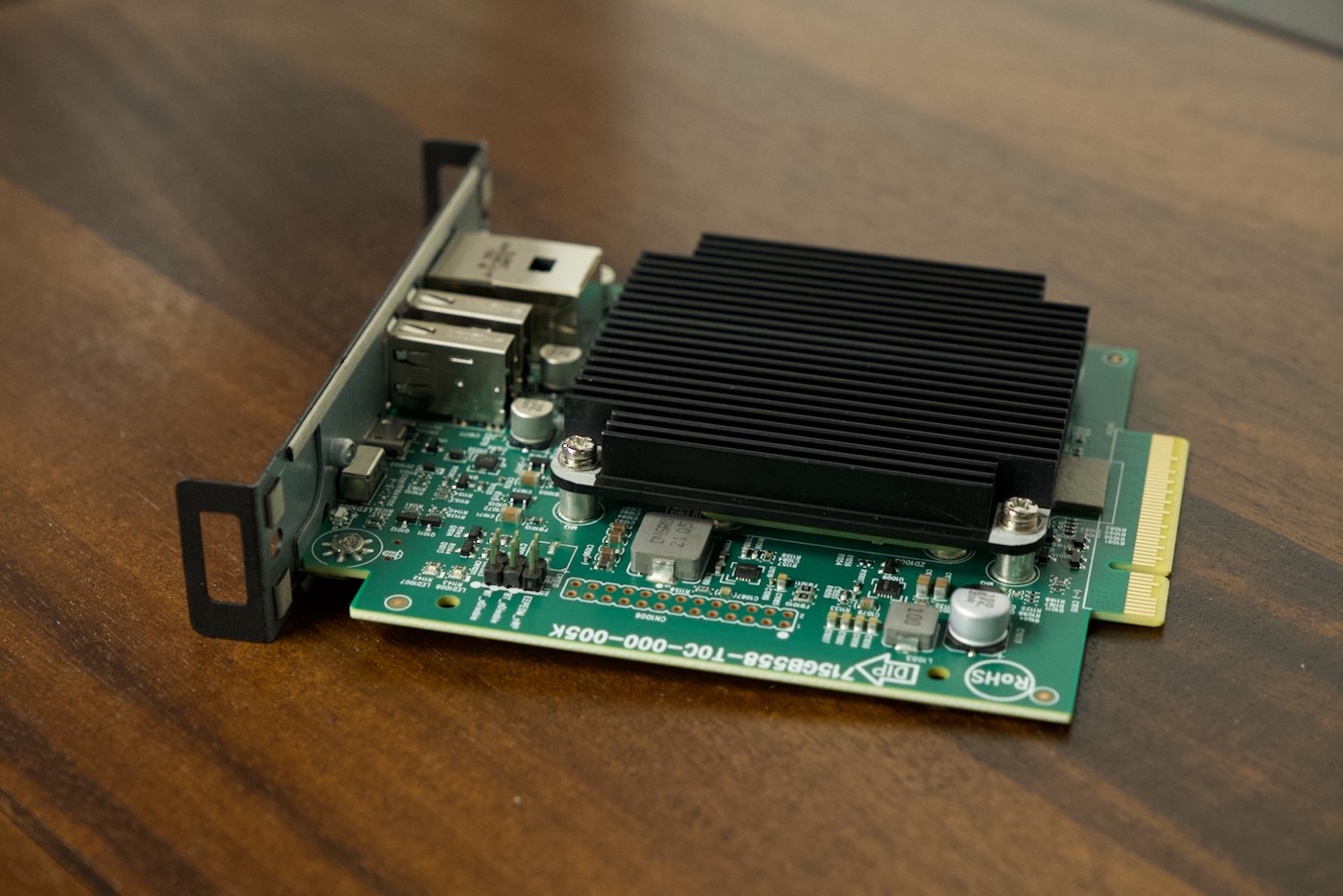
I've been tracking dozens of CM4 carrier boards since the Compute Module 4's launch, but none have lived inside a display like this one.
…Using LibreELEC like a pro—management via SSH
For a recent project, I needed to install LibreELEC/Kodi on a Raspberry Pi Compute Module 4 with built-in eMMC storage.
Because it's inconvenient to be swapping the Pi around from the embedded display I was using it in to my preferred carrier board I use for flashing Pis and interacting with their filesystems, I wanted to manage my LibreELEC install over SSH.
It seems like whatever documentation the LibreELEC Wiki used to have for remote SSH access is missing, and all I could find were references to enabling SSH during a GUI setup wizard. If you didn't see that during initial setup, the easiest way is to add ssh to the end of the line in the system's cmdline.txt file, then reboot.
Two Macs in my Rack: Mac Studio rackmount review
No stranger to rack-mounting Macs that were never meant for the task, I reached out to MyElectronics to see if they had a rackmount solution for the Mac Studio when I bought mine in March.
They said they were already working on a Mac Studio Rack Mount system, and they'd gladly send me one to review, since they knew how much I loved rackmounting my M1 Mac mini and all the Raspberry Pis I run in my homelab.
…