Father, author, developer, maker. Please consider sponsoring my work.
Making Noctua fans work (quietly) with a Supermicro motherboard
I've been building a Mini ITX 'quiet-ish' server using a Supermicro motherboard and some Noctua fans.
I noticed sometimes the system would start 'revving' the fans up to max power. Then after a few seconds they would get quiet again. The CPU temps and other temps on the system were stable and not worrying, but popping off the server's cover, I noticed LED8 on the motherboard would blink red every time the fans would ramp up:
…Resetting IPMI and upgrading BIOS on a Supermicro motherboard under FreeBSD (or not)
That title is awfully specific.

But I was building a new FreeBSD server with a used SuperMicro motherboard with IPMI. The default password was changed from ADMIN (or maybe it's a new enough board that it's a random password), and when I was booted into FreeBSD, I wanted to reset the IPMI settings so I could be sure I was starting fresh.
ipmitool that came with my FreeBSD install doesn't seem to be able to reset IPMI to factory defaults, so I tried running ipmicfg from Supermicro's website (which is annoying to download—you have to fill out a form and a Captcha for the privilege).
PTP and IEEE-1588 hardware timestamping on the Raspberry Pi CM4
2024 Update: This works out of the box on the Compute Module 5. See comment.
I've been following the issue CM4 is missing IEEE1588-2008 support through BCM54210PE since I heard about IEEE1588-2008 support on the Compute Module 4 last year.

Apparently the little NIC included on every Compute Module 4—the BCM54210PE, which is different than the NIC on the Pi 4 model B (a BCM54213PE)—includes support for a feature called PTP, or Precision Time Protocol.
The Raspberry Pi Pico W brings WiFi for $6
Today, Raspberry Pi announced the Pico W, a new $6 version of the Pico that includes WiFi.

No word yet on Bluetooth. The WiFi chip in the Pico W (Infineon CYW43439) supports it, but right now the RP2040 firmware lacks Bluetooth support.
The Pico W being available for just $6 is huge, because one of the chief complaints about the original Pico (powered by Raspberry Pi's own RP2040) was its lack of wireless support—a feature present on similarly-priced boards based on the ESP32 and ESP8266.
…Answering Questions about the PetaPi
A few weeks ago, I posted a video about the Petabyte Pi Project—an experiment to see if a single Raspberry Pi Compute Module 4 could directly address sixty 20TB hard drives, totaling 1.2 Petabytes.
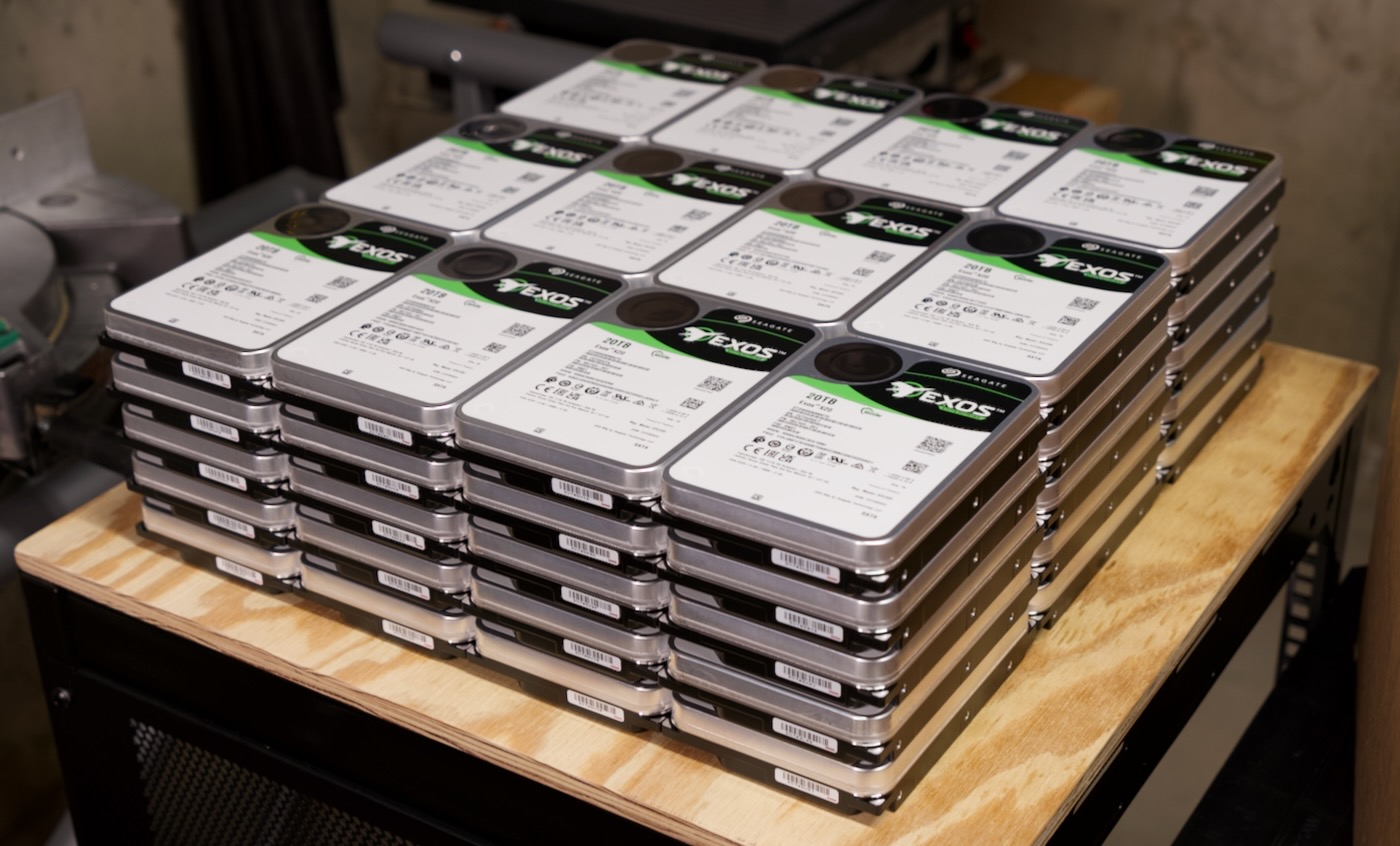
And in that video, it did, but with a caveat: RAID was unstable. For some reason, after writing 2 or 3 GB of data at a time, one of the HBAs I was using would flake out and reset itself, due to PCI Express bus errors.
…ESPHome on the Raspberry Pi Pico!
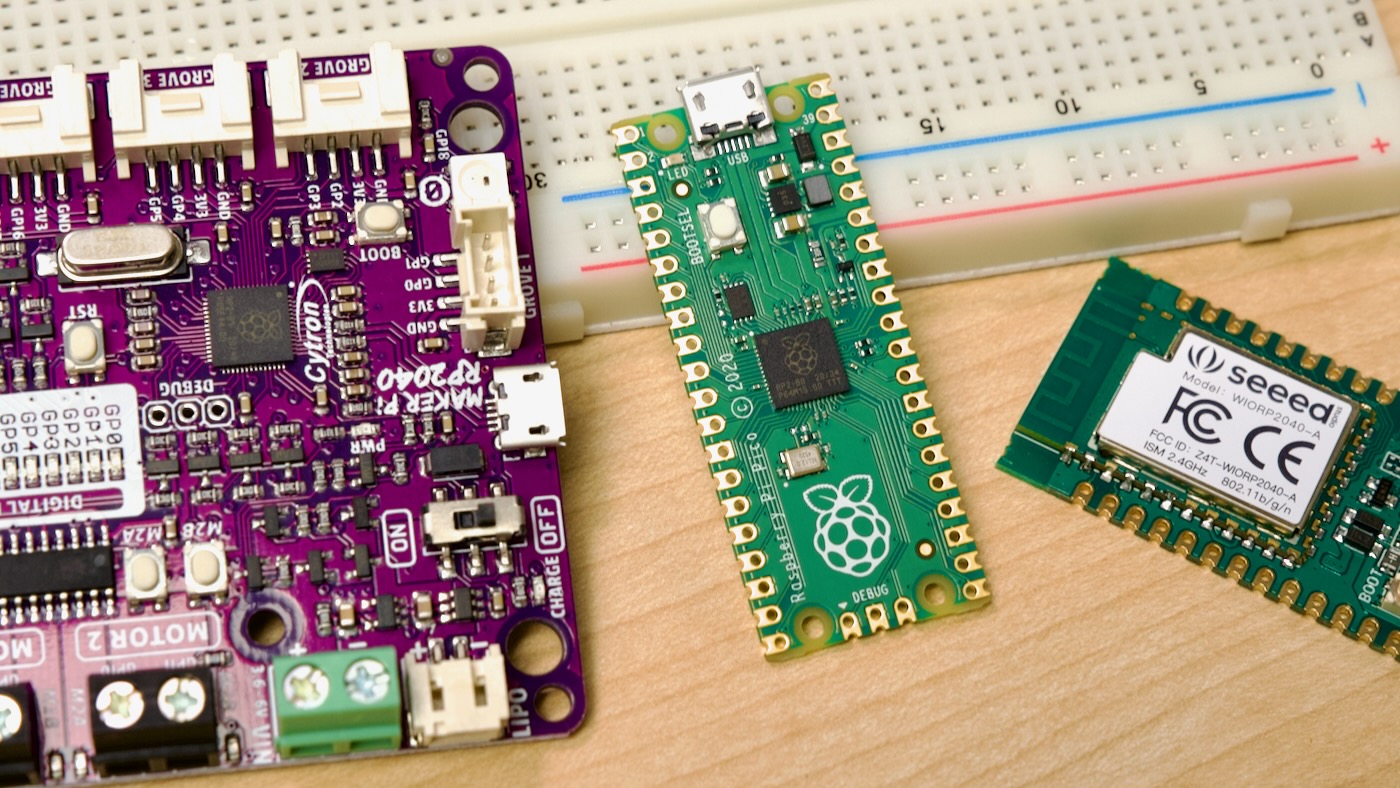
A couple weeks ago, I glanced through my ever-growing collection of Raspberry Pi RP2040-based boards—pictured above are three of the boards I've tested: a Cytron Maker Pi RP2040, a Raspberry Pi Pico, and a Seeed Studio Wio RP2040.
I'm not an expert in embedded programming by any means, but I've played with Arduinos, the ESP8266, and Raspberry Pi's RP2040—all of which are great for building little low-power home sensors to integrate into my Home Assistant Yellow...
…