Father, author, developer, maker. Please consider sponsoring my work.
HTGWA: How to completely erase a hard drive in Linux
This is a simple guide, part of a series I'll call 'How-To Guide Without Ads'. In it, I'll show you how I completely initialize a hard drive so I can re-use it somewhere else (like Ceph) that doesn't like drives with partition information!
First, a warning: this blog post does not show how to zero a hard drive, or secure erase. That's a slightly different process.
But as someone with way too many storage devices (from testing, mostly), I find myself in the position of trying to use a spare drive in some place where it expects a brand new drive, but winds up failing because the drive had a partition, or had valid boot files from an SBC or something.
…So you want to make a Raspberry Pi killer...

I'm in the unique position of owning a collection of Raspberry Pi Compute Modules 4 (CM4).
I also own at least one of every production CM4 clone in existence.
This sets up a quandary: if I have the real thing, what motivation do I have to care about the clones?
There are hundreds of CM4 carrier boards that do everything from restoring retro game consoles to monitoring remote oil rigs in highly-explosive environments.
…A PCIe Coral TPU FINALLY works on Raspberry Pi 5
Coral.ai TPUs are AI accelerators used for tasks like machine vision and audio processing. Raspberry Pis are often integrated into small robotics and IoT products—or used to analyze live video feeds with Frigate.
Until today, nobody I know of has been able to get a PCI Express Coral TPU working on the Raspberry Pi. The Compute Module 4, unfortunately, had some quirks in its PCIe implementation, preventing the use of the Coral over PCIe.
…How to customize the dtb (device tree binary) on the Raspberry Pi
Every so often, when you're debugging weird hardware issues on SBCs like the Raspberry Pi, it's useful to get way down into the guts of how the Pi represents its hardware to Linux.
And the Linux kernel uses a method called Device Tree overlays to do it. On the Pi 5 (and other Pis), these overlays are stored as .dtb files inside the /boot/firmware directory, and there's an overlay for every major Raspberry Pi hardware model.
The Mighty 'MOX: 50kW AM Tower site tour
Nearing it's centennial, KMOX-AM (1120 kHz) is a 50,000-watt clear-channel AM radio station with studios located in downtown St. Louis, MO, USA.
But their broadcast tower is located about 10 miles northeast, in Pontoon Beach, IL. My Dad was the director of engineering overseeing the tower and studios for about 20 years, and though he's no longer there, he and I got permission from Audacy and the St. Louis engineers (thanks!) to tour the site, and learn a bit about how they broadcast their AM signal—which reaches all the way into Canada and Mexico at night!
…Smart home automation shouldn't be stupid
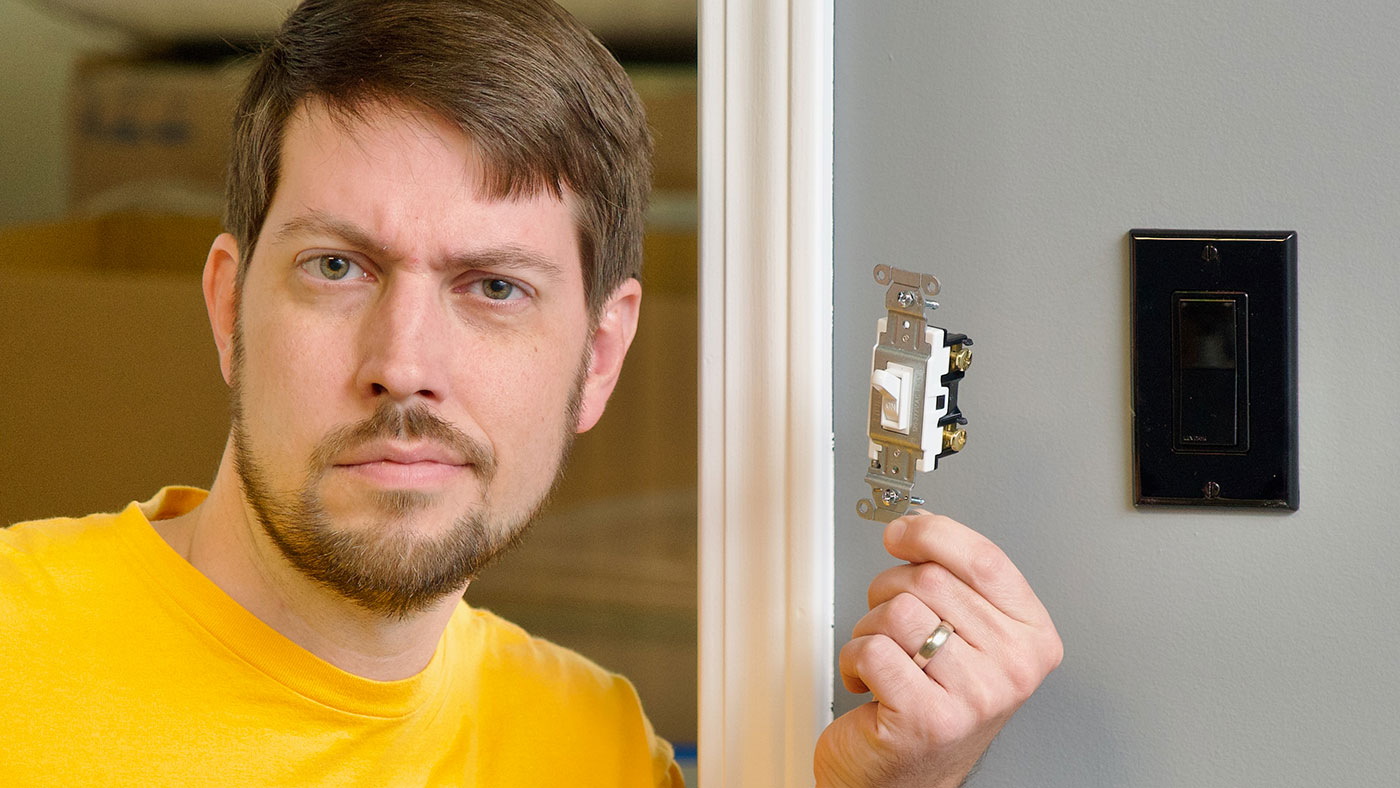
There are far too many smart home devices which make using a device harder. Like a light switch and light bulb that requires a wireless connection to a hub in order to control the lights.
Before, you could flick a switch, and a light would come on.
Now, you have to ensure the light has power, the switch has power, and the hub has power. And the wireless connection between switch, hub, and light needs to be reliable. And the hub can't lock up or go offline. And if it's anything like most modern IoT devices, the hub needs a reliable Internet connection and cloud account, or things will start failing at some point.
…