Father, author, developer, maker. Please consider sponsoring my work.
Using GPS for the most accurate time possible on a Mac
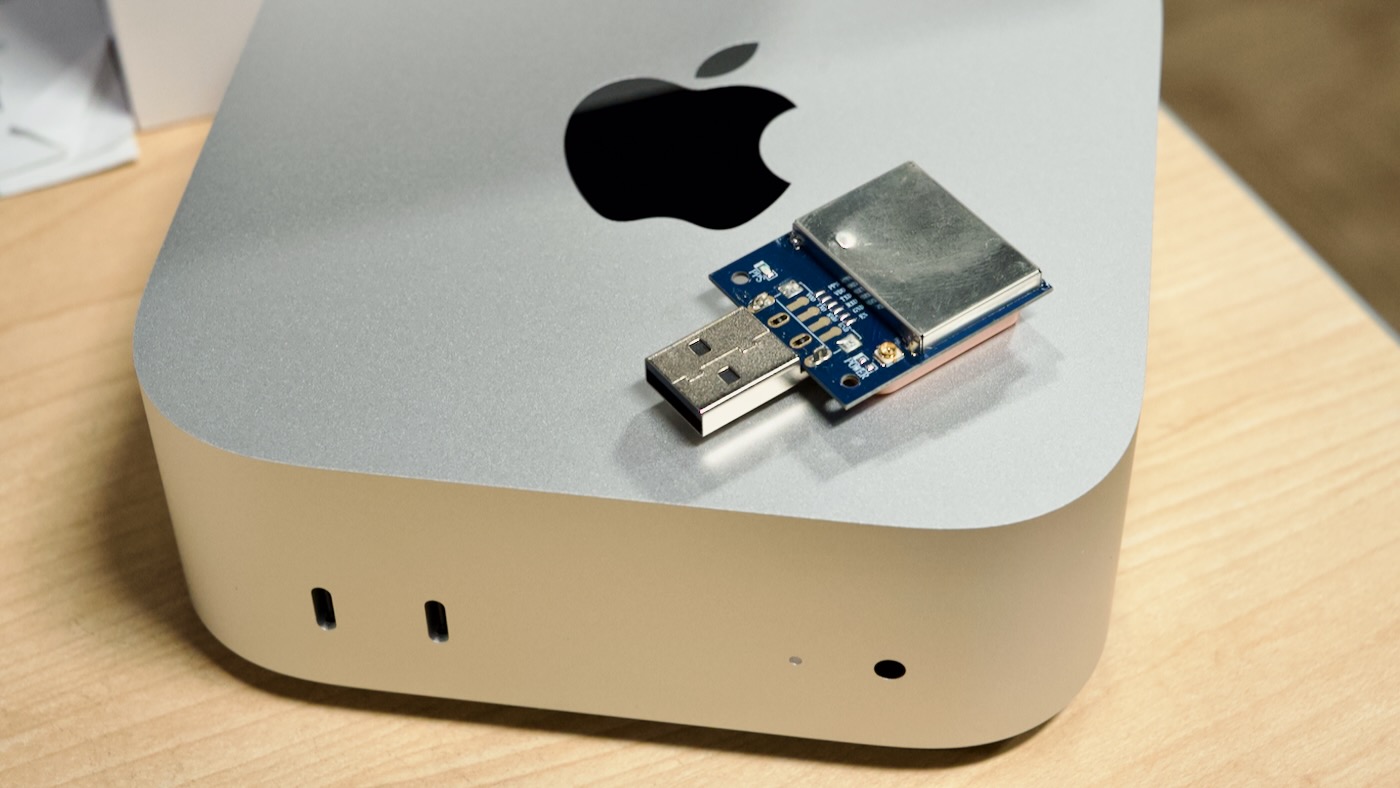
I'm deep in the rabbit hole of all things time and timing. One step on any modern horologist's journey is GPS time.
NIST just put NIST-F4 online, accurate to within 2.2e-16 ppm (that's 0.00000000000000022 seconds. The clock is described in Metrologia thusly:
The fountain uses optical molasses to laser cool a cloud of cesium atoms and launch it vertically in a fountain geometry.
Imagine having access to an "optical molasses" clock, plus millions of dollars of other atomic clocks, for a one-time $10 or $20 fee—well, that's GPS in a nutshell. And today there are multiple PNT (Positioning, Navigation, and Timing) constellations—not just the GPS constellation run by the US—which we refer to as 'GNSS' constellations.
…Installing an outdoor GPS antenna for more accurate time
I've been deep into time and timing lately (more shenanigans coming tomorrow), but today I posted a video covering the install of a PCTEL GPS/GNSS antenna at my studio.

I put up the antenna after realizing how indoor GPS reception is just never that great, due to a variety of factors (like multipath propagation and interference), even if I placed my antennas up in the plenum space right under the roof. Of course, it doesn't help that my studio has a metal roof :)
…Radxa Orion O6 brings Arm to the midrange PC

...with caveats.
TL;DR
- The Radxa Orion O6 is an Arm ITX motherboard with up to 12 cores, 64 GB of RAM, and Armv9.2 support, starting just over $200 USD
- The board has a SystemReady SR-certified BIOS, which allows running Windows on Arm and many Linux arm64 ISOs unaltered
- The firmware still has many quirks, enough that I wouldn't recommend it if you don't enjoy tinkering with drivers (remember how I said to temper your expectations in February?)
- Prices for those in the US (like me) just tripled due to import tariffs (ordering the 32 GB model went from $400 to $1500).
The rest of this post is a version of today's video, modified to suit the blog. You can watch the video version below:
…4x faster network file sync with rclone (vs rsync)
For the past couple years, I have transported my 'working set' of video and project data to and from work on an external Thunderbolt NVMe SSD.
But it's always been slow when I do the sync. In a typical day, I may generate a new project folder with 500-1000 individual files, and dozens of them may be 1-10 GB in size.
The Thunderbolt drive I had was capable of well over 5 GB/sec, and my 10 Gbps network connection is capable of 1 GB/sec. I even upgraded my Thunderbolt drive to Thunderbolt 5 lately... though that was not the bottleneck.
…Trying out a cheap USB VK-172 GPS dongle on a Mac
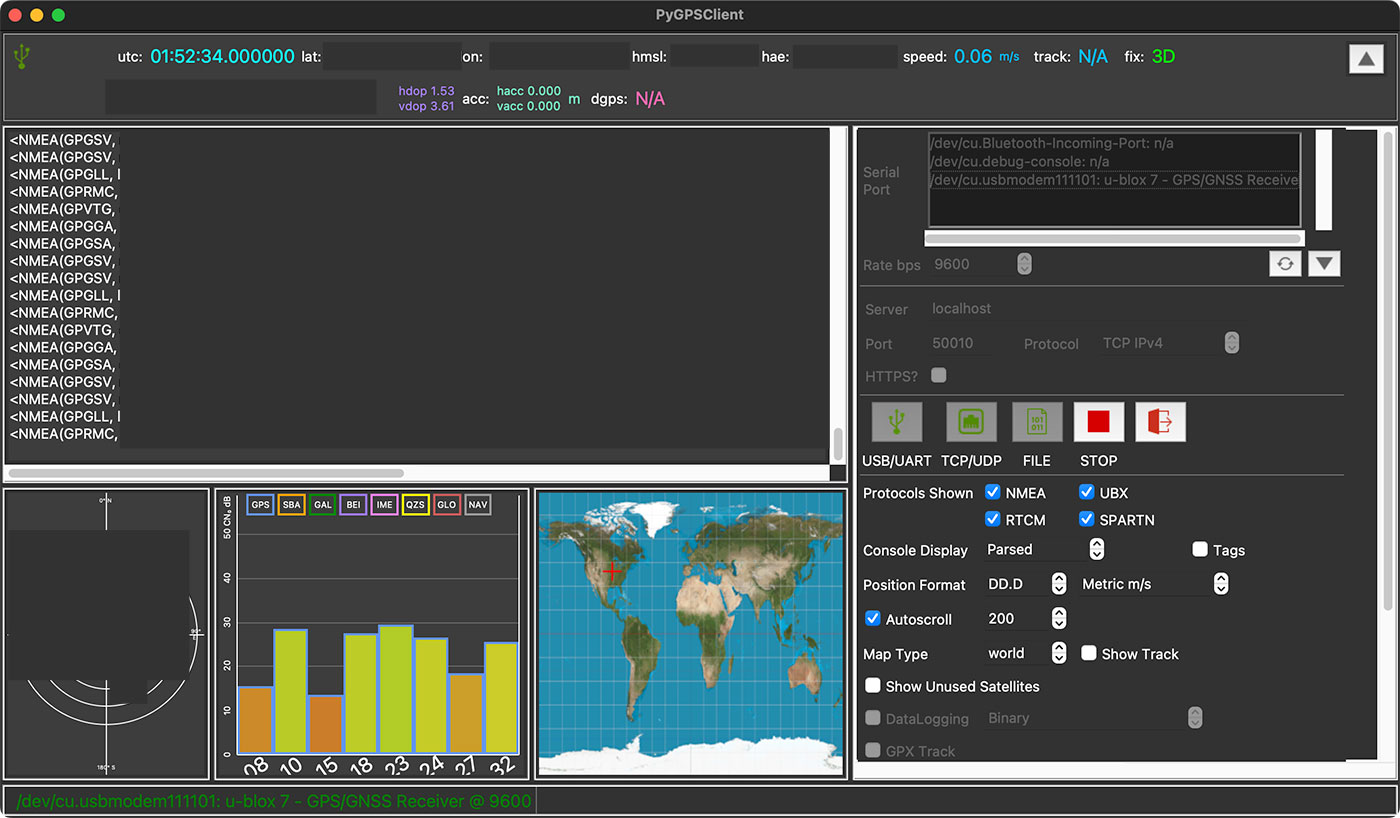
I've been getting into time, with my most recent project being a DIY PTP Grandmaster Clock with a Raspberry Pi.
For most civilians, the most accurate source of time available comes from satellites—GPS, GLONASS, Galileo, Beidou, etc.—nowadays referred to as GNSS (Global Navigation Satellite System). Originally targeted at GPS only, even cheap dongles today cover multiple constellations adding to the accuracy and coverage of satellite-based positioning and timing signals.
…The (almost) perfect mini NAS for my mini rack
The GMKtec G9 N150 4-bay NVMe mini PC is $240 and the nearly perfect NAS for my mini rack:

It has an Intel N150 4-core SoC with halfway-decent Intel UHD integrated graphics, 12 GB of LPDDR5 RAM, dual 2.5 Gbps Ethernet, WiFi 6, and the best part: 4 integrated M.2 NVMe slots.
Granted, splitting up the 9 PCIe Gen 3 lanes limits the performance a bit, but there are some things I love about this design:
…