Father, author, developer, maker. Please consider sponsoring my work.
YouTube views are down (don't panic)
September 15 update: @YouTubeInsider confirmed that the issue is related to viewers who have adblockers enabled—YouTube's been in an arms race with ad blocking tools, and the fallout is a substantial cut in counted views for creators who have a large audience watching from desktop.
Many YouTube content creators, myself included, noticed something in early to mid-August: views were down.
After being on the platform since 2006 (though for me, not being a 'professional' YouTuber until about 5 years ago), I'm used to seasonal dips, adjustments after new tweaks to the algorithm or layout/design changes.
…I bought the cheapest EV (a used Nissan Leaf)

I bought a used 2023 Nissan Leaf in 2025, my first 'new' car in 15 years. The above photo was taken by the dealership; apparently their social media team likes to post photos of all purchasers.
I test drove a Tesla in 2012, and quickly realized my mistake. No gasoline-powered car (outside of supercars, maybe? Never drove one of those) could match the feel of pressing the throttle on an electric.
…How to install TrueNAS on a Raspberry Pi
Now that Joel0 in the TrueNAS community has created a fork of TrueNAS that runs on Arm, I thought I'd give it a spin—on a Raspberry Pi.

I currently run an Ampere Arm server in my rack with Linux and ZFS as my primary storage server, and a Raspberry Pi with four SATA SSDs and ZFS as backup replica in my studio. My configuration for these Arm NASes is up on GitHub.
…Reverse Engineering ALL the Raspberry Pis
Earlier this month I covered Jonathan Clark's effort to reverse-engineer the Pi Zero 2 W, and just yesterday, I discovered TubeTime reverse-engineered the Compute Module 5.
Both are graciously sharing their schematics and process on GitHub:
- jonny12375/rp3a0 for the Zero 2 W / RP3A0
- schlae/cm5-reveng for the CM5 / RP2712
Raspberry Pi shares limited board schematics, but sometimes—especially when digging into some esoteric edge case for a carrier board, or in Jonathan's case, desoldering all the chips and building a Pi Zero 2W into a Pico form factor PCB—you need more.
…TrueNAS on Arm is finally a thing
A few years ago, I admit it was rare to find someone running Arm hardware more powerful than a Raspberry Pi in a homelab (or more serious) setting, outside of cloud providers running Ampere or custom Arm CPUs.
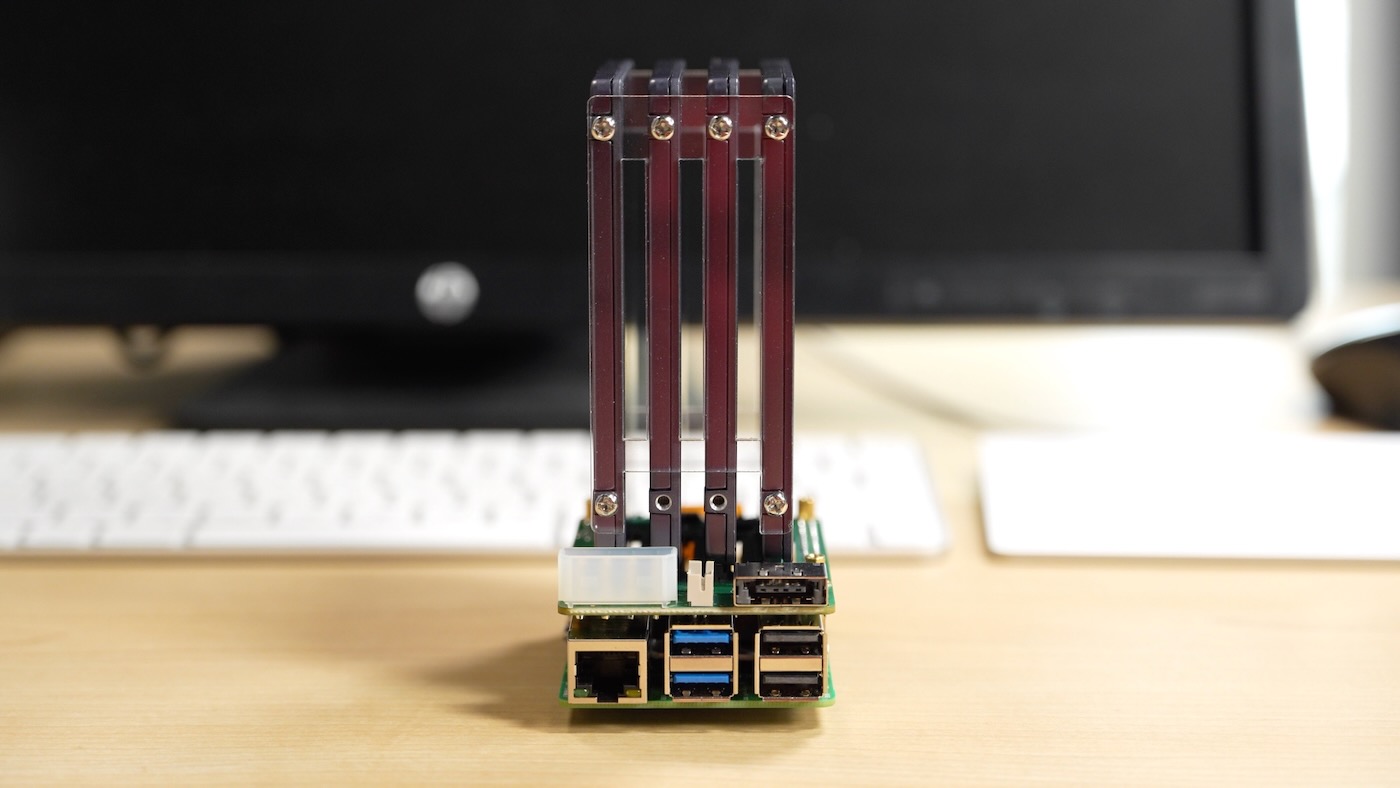
But as Pis and Rockchip boards have become more powerful (and efficient), and Apple's M-series silicon has become more interesting (the M4 mini being an excellent value proposition for a quiet, tiny server), and even Ampere Altra pricing coming down a bit since it's an 'old' server CPU now, still offering 64 or 128 lanes of PCIe Gen 4... I don't think I'm weird in suggesting Arm is a viable platform for reliable, even powerful servers.
…Build log: Macintosh Classic
Continuing the retro computer series, I've recently completed the first part of a restoration of my Aunt's old Macintosh Classic.

This Classic was handed to me alongside my Uncle Mark's Apple II, which I'll probably cover later (we've played a game of whack-a-mole with issues on that machine! Well worth it but I haven't hit a point where enough things are working to cover it well, heh).
The Classic is a strange Mac—it was introduced in 1990 as a budget version of the 1986 Macintosh Plus, with a 68000 CPU in an era when the 68030 was the new hotness.
…