Open Sauce and GPS time were my summer AI Antiseptics
In the midst of our AI slop revolution, traveling to the West coast for Open Sauce this past weekend was the perfect antiseptic for rising costs, summer heat, and online divisiveness.
It's ironic, then, that I used Claude to vibe code my Tufty GPS Time Badge.
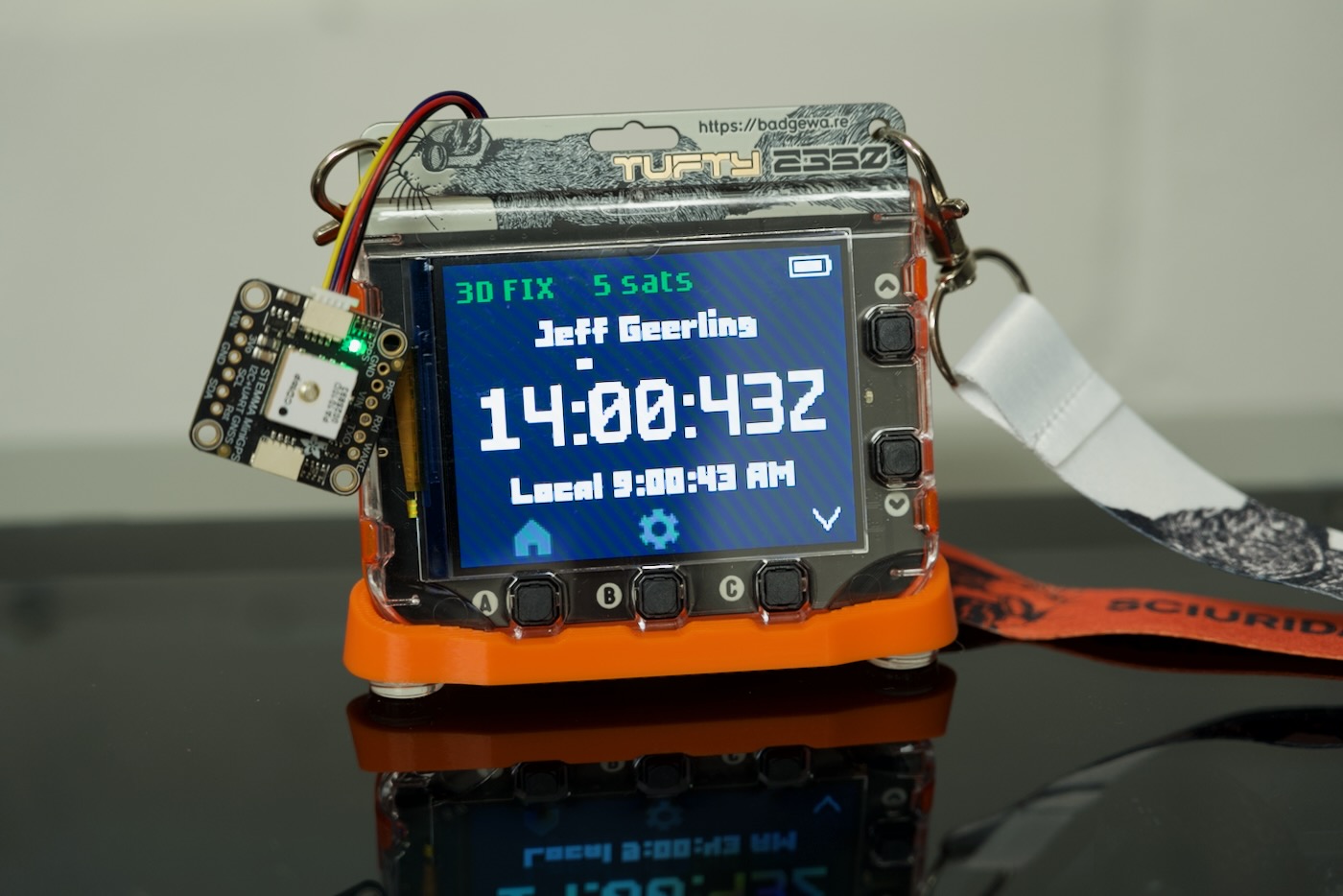
Partly due to time constraints, and partly because I wanted to see if I could complete a personal project end-to-end, without editing a line of code, I throw my requirements at Claude and ultimately came up with this 2141-line MicroPython app for Pimoroni's Badgeware ecosystem.
GPS Time Badge
Using Pimoroni's Tufty 2350 and Adafruit's PA1010D MiniGPS addon module, I built a Badgeware App called 'GPS Time' which disciplined the badge's internal RTC using GPS's time data, which can be accurate to the nanosecond.
I say can be because I wasn't able to find a GPIO pin available on the Tufty 2350 for PPS input1. Therefore I was reliant on MicroPython's rough timing and I2C interrupts to displine the internal clock. This is not ideal, and in some conditions, resulted in the clock being 100-200ms off. Most often, it was only a few milliseconds, but the variation is likely due to BadgeOS's highly abstracted architecture.
It's easy to program (especially for quick UIs), but not built to be a robust real-time OS!
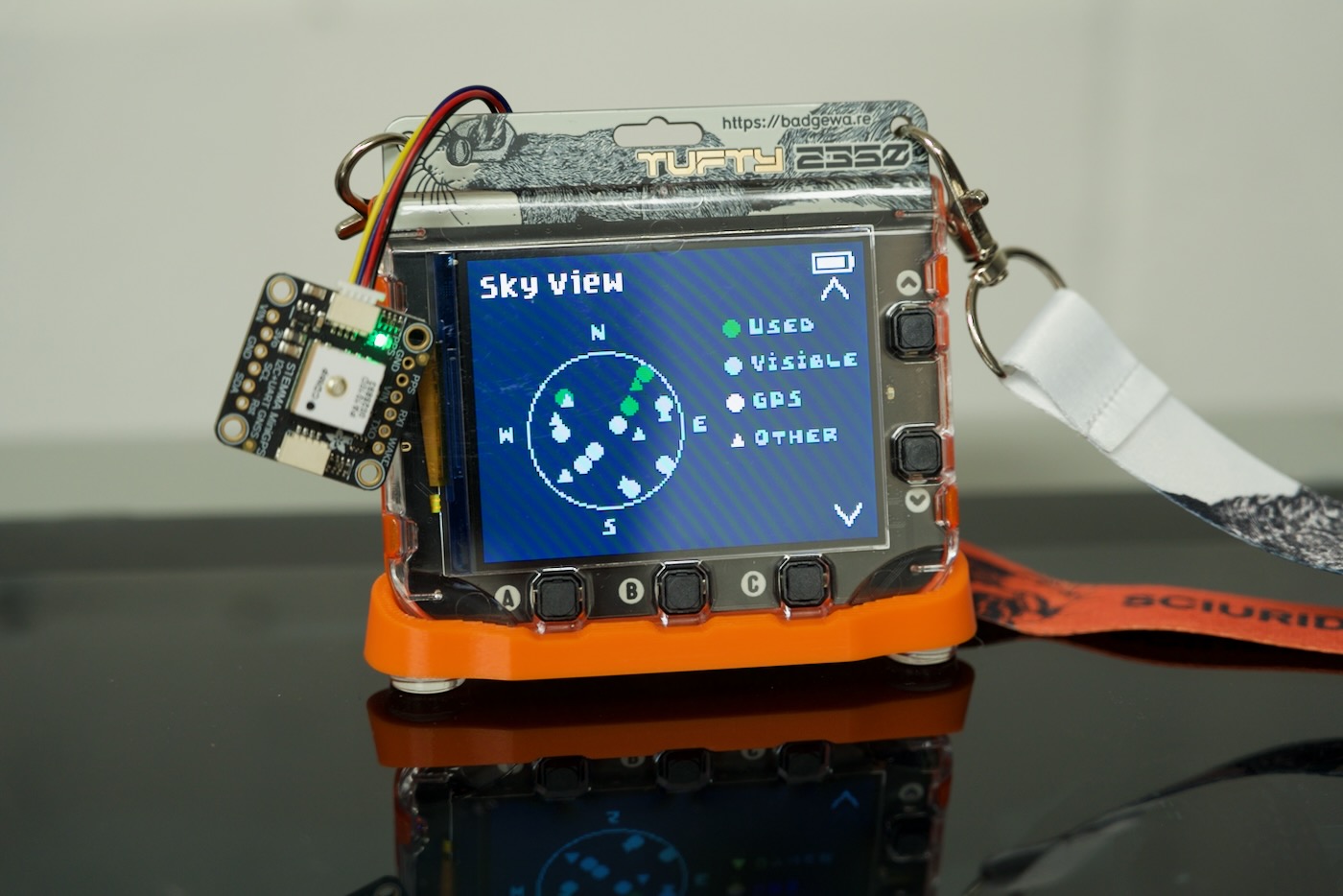
The point of the Time Badge was "to have the best time" at Open Sauce, though—what's a few microseconds between friends?
I could get PPS out to compare my GPS to other clocks—and I did that (more in the video embedded later in this post). But I also wanted to do a little experimentation. Having direct access to a wearable GPS module's data, I logged GPS satellite and fix quality throughout the day, as I walked around the venue.
With a few thousand datapoints, I whipped up this visualization of all the data points using Claude:
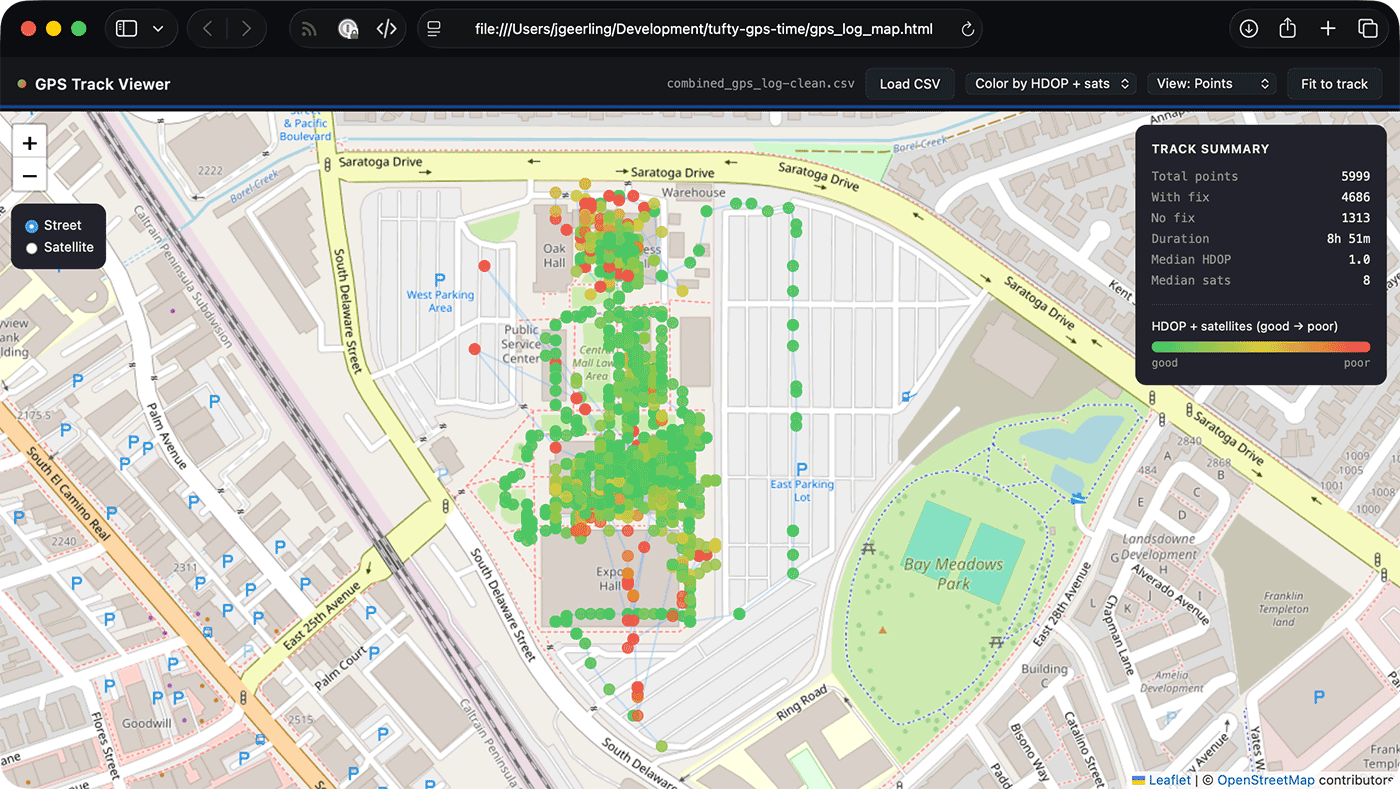
(You can click on the above image to go to an interactive web page.)
One-off coding of scripts and side projects is handy, but the main use case I've had for AI tools is data visualization. I was always terrible at turning datasets into useful interactice graphs (I struggled mightily back when I was running Server Check.in)... but this was pretty useful and usable. I did have to redirect Claude a few times, to do the right thing (AI is pretty dumb, still).
One thing I quickly learned: besides the hall where the Main Stage was located, all the buildings had either wood or otherwise RF-transparent roofs. I was getting pretty good 6-8 satellite fixes wherever I went!
There were a few sections where I saw more interference (that's where most of the red dots come from), but on the whole, it was easy to have a good time at Open Sauce.
Open Sauce
But that's just GPS time. I also had a great time interacting with everyone. And as I mentioned in the introduction to this blog post, it was incredibly refreshing to have 8+ hours with no screens present, no AI, only direct human interaction2.
I met more than a few of the HN crowd at Open Sauce this year3. A venn diagram of Hacker News readers and those who would enjoy the majority of the Open Sauce exhibits is practically a circle.
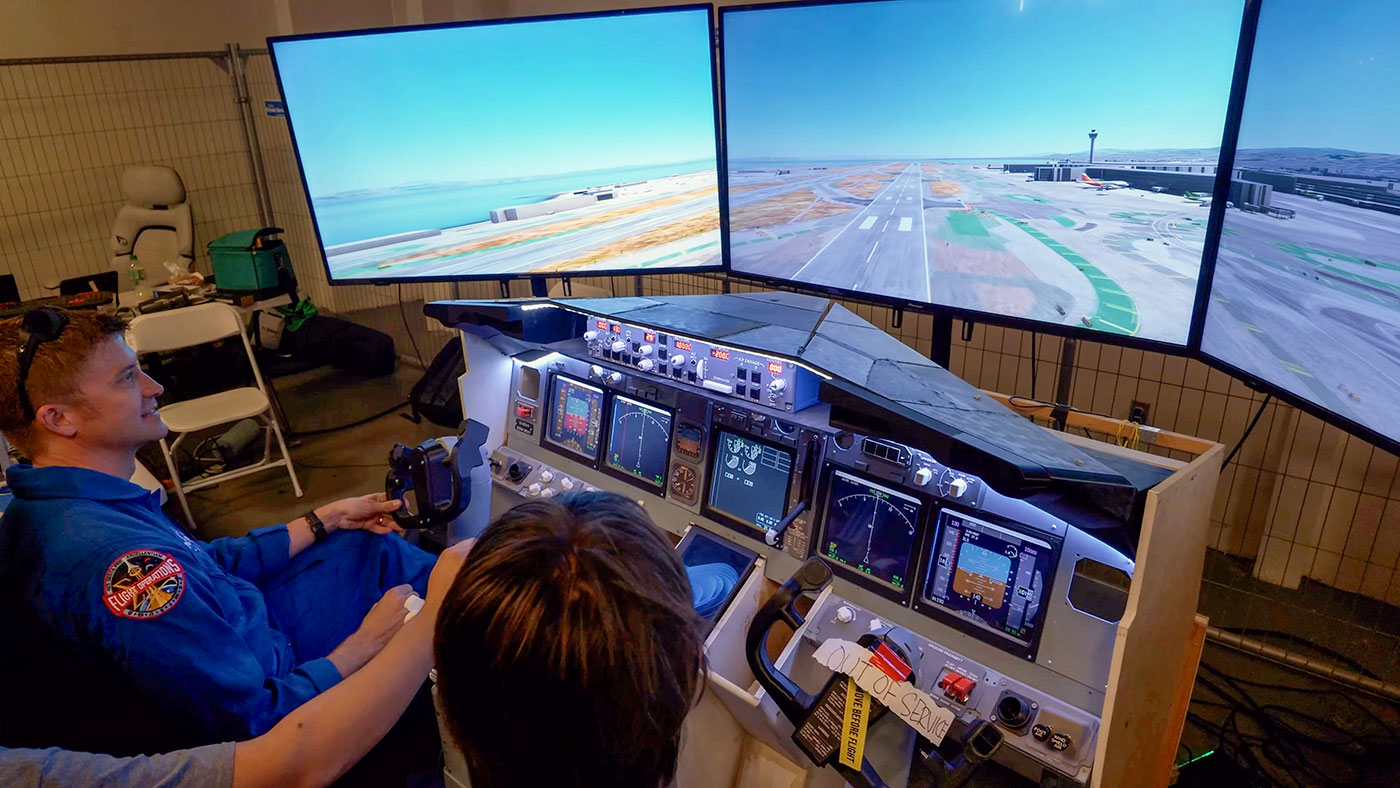
There were numerous exhibits of note:
- A 3D printed orbit-accurate replica of our solar system—complete with each planet's moons
- Multiple Raspberry-Pi controlled pianos
- Multiple driving couches
- A functional 3D printed 737 cockpit (in which I witnessed NASA astronaut Matthew Dominick buzz the entire bay area while egged on by Scott Manley and a large crowd of bystanders)
- Nifty Apollo-era space hardware CuriousMarc, Ken Sheriff, and TubeTime bring for on-the-floor restoration and display
- Roving freely on the floor: a Mac Classic on tracks, a Prusa Core One 3D printer on hexapod legs (actively printing), a walking coffee table, multiple star wars droids](https://www.bayareadroidbuilders.com), even TROGDOR!
- Taser Chess (which I was lucky enough to experience)
- A drone that converts into a car (and vice-versa)
- A moon rock from Apollo 15, and part of Artemis' heat shield, at a NASA Ames Research Center exhibit
There's far too much to cover in this blog post—I tried to do so last year, only to realize I still missed about 30% of the booths!
So here's a video showing some of my highlights, especially relating to my personal theme this year, time:
Some people come to see their favorite content creators, but the main draw for me is talking to exhibitors and attendees. Most of them give me a severe case of imposter syndrome.
Pimoroni made a special edition GitHub Universe Edition of the Tufty, which exposed four GPIO pins externally. Unfortunately those don't seem to be broken out anywhere on the final production Tufty 2350 :( ↩︎
I used to go on at least one 2-3 day silent retreat every year. I should probably find a way to do that again. While being away from screens was great, being away from screens and alone with hours of quiet time would be nice too. Having five kids tends to null out any available free time, though :D ↩︎
Let's be honest, since Google traffic dwindles to almost nothing (AI summaries often throw my blog link in a footnote nowadays), Hacker News visitors are probably 70-80% of this blog's human readership, with the other 20% being those who read via RSS feed. ↩︎
Comments