⚠️ Warning This post is more than 10 years old. I do not delete posts, because even old information is still useful, but please know that some material on this page may be outdated or incorrect. Thanks!
Jan 11, 2011
I'm working on increasing the quality of video sent through the Cathedral Basilica of St. Louis' in-house video distribution system (right now they use passive composite video connections over Cat5 cabling, and video is very blurry with lots of ghosting), and I thought I'd briefly share my findings in this area.
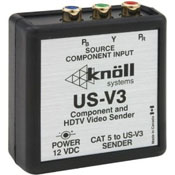
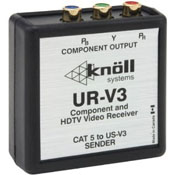
I've decided to go with an 'active' (powered) video send/receive unit, from Knoll Systems:
The basic principle is this: To get high-quality video from point A to point B, you need a good signal. The longer the distance of the cable, the weaker the signal will be.
While it's possible to run three individual coaxial or RCA-type cables over a 100'+ distance, this would be a hassle, and would be prohibitively expensive. Rather, most wiring projects these days involve Cat5e and Cat6 networking cables, which can be used for a variety of purposes, especially since the use of Baluns has increased.
Run Cat5e or Cat6 network cable from point A to point B (use cable grease, gloves, and get dirty!). Run an extra cable or two if you think you'll need it. (Pick up some bulk Cat5e cablefrom Amazon for a good price).
Buy a send and a receive video balun (see links at top of this page), and wire everything together.
Once you're done with the wiring, you should have a relatively clean (up to) 1080p signal. It's a lot cheaper (and easier to run over long distances) than pre-made HDMI or component video cables.
Review of Knoll Systems Component Video Baluns
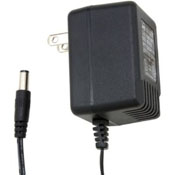
These baluns definitely look good on paper: They use a 12V power supply (sold separately - order links above), so they give a stronger signal over longer distances than traditional/cheaper 'passive' baluns. Additionally, the Knoll Systems components can distribute video to more than one device with the use of one of their hubs (or any non-switching 'dumb' network hub).
I will post a full review of these baluns when they arrive (I just ordered them!).
Alternatives
You can, of course, use one of the many unpowered baluns (which are usually anywhere from $40-60), or opt out of high definition (especially if your TV/projection system doesn't support HD!), but if you want to go higher quality than this, you'll have to look into digital systems (TV over IP), which cost a bit more.
I'm also building a new site, Everything Over Cat5, to compile my different projects/experiences with Category 5 copper cabling. It's awesome—check it out!
Any questions? Any better ideas or experiences with other baluns?




Comments